The Remnants of Denim in North America
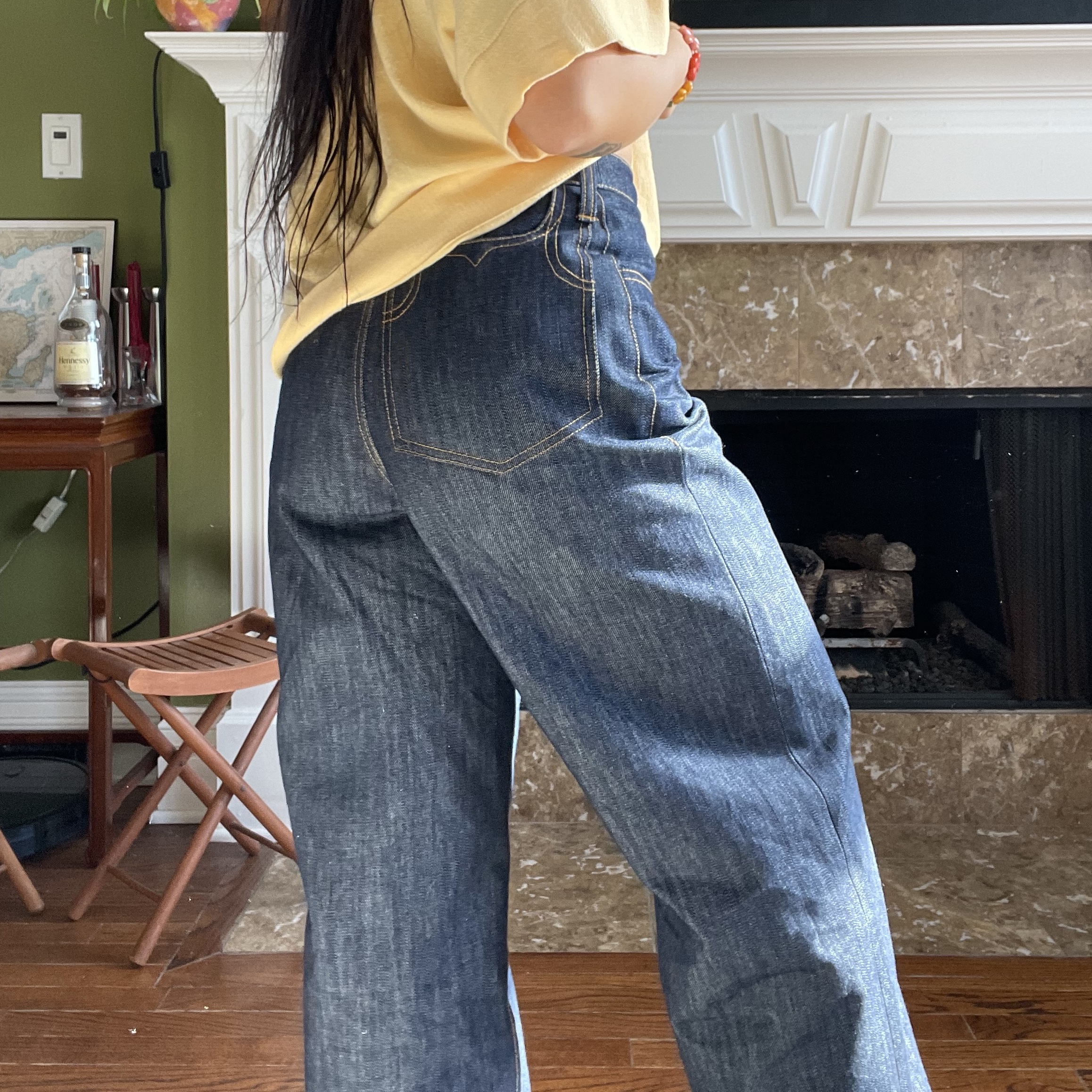
My first pair of jeans.
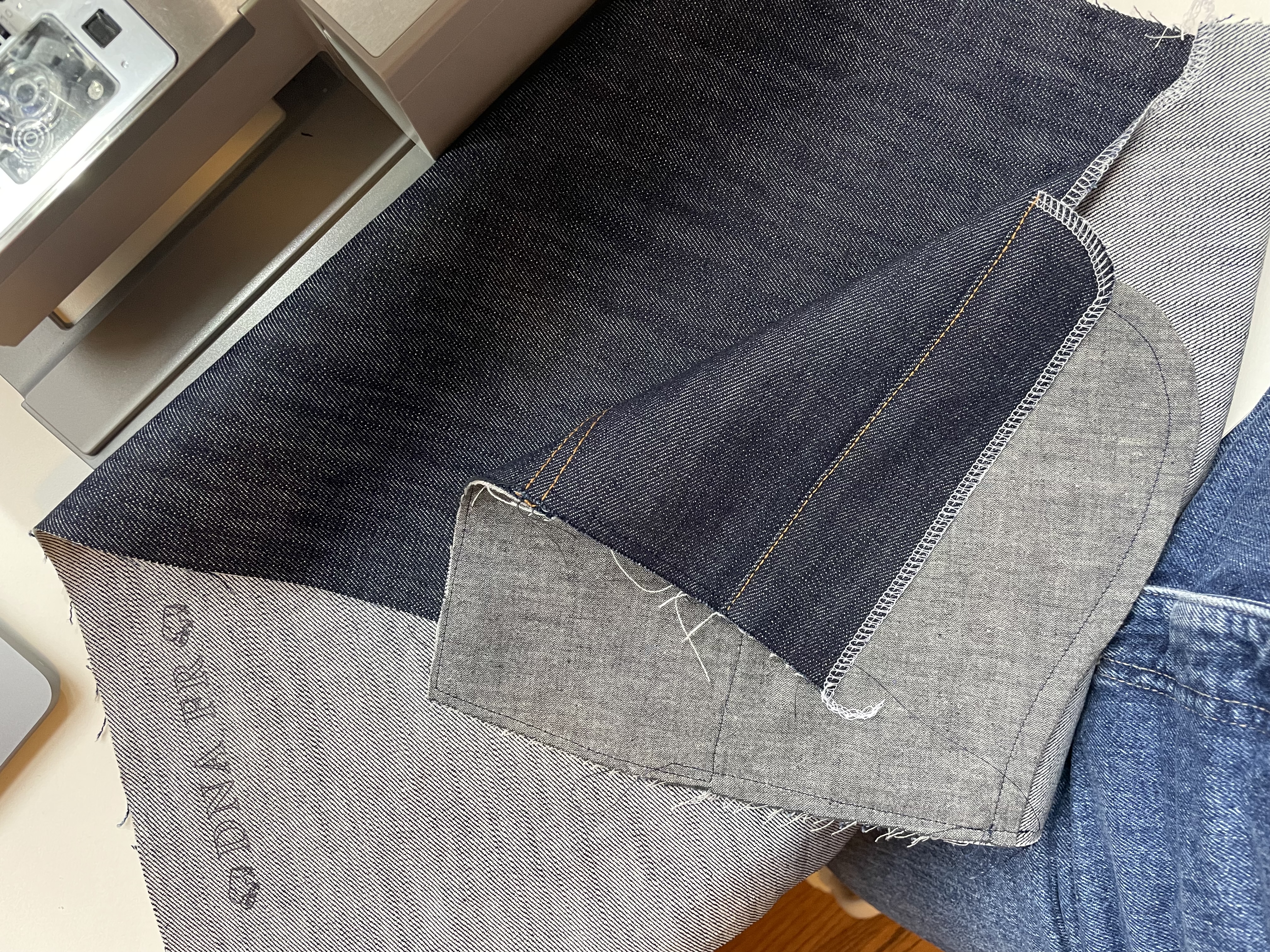
Earlier this year I came across a bolt of indigo denim that caught my eye, though I can't exactly describe why. Was it the color, texture, or something else? It had that perfect mid-dark wash and a hardy handfeel that attracted me to it. I caught of a glimpse of the manufacturer's signature and felt even more convinced by its quality: "DNA FR," it said. French denim, I thought, even more unique! and purchased it before heading out.
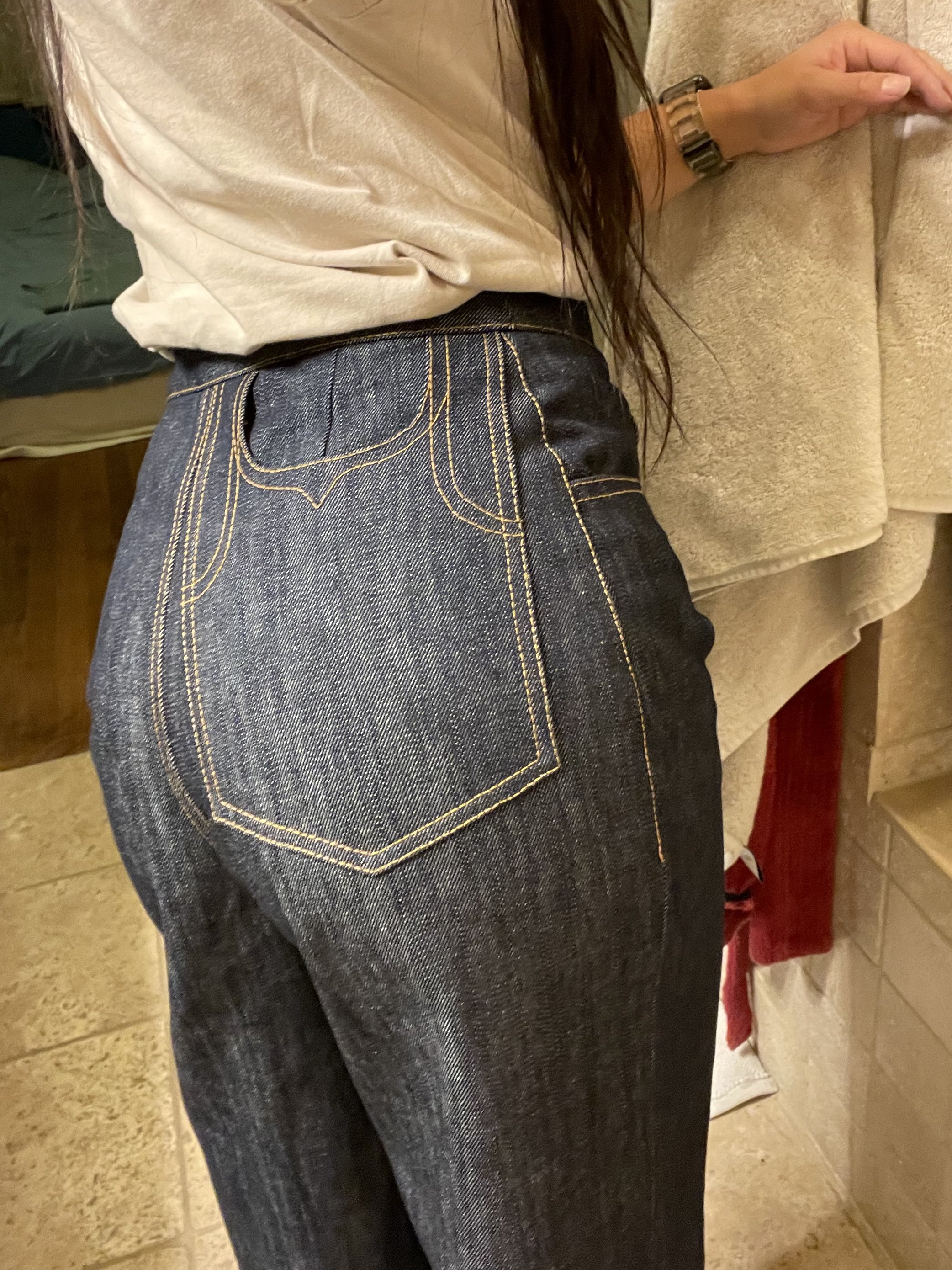
When it came to researching design details for my first pair, I was gifted a copy of TAUKO Magazine's No. 14 edition on denim, which featured a piece on original 1800s workwear rescued from Nevada mines. There was a fantastic reference image and modern replica of a back pocket, the shape of which, I learned, was originally designed to fit a pointed spade. Further, I discovered that most original pairs of denim only had one back pocket, as most miners were right-handed.
The first jeans as we know them were the result of not the particular combination of pants constructed from duck cloth or denim, but actually a patent for rivets, those little round button-like fasteners that may or may not be affixed at the top of a pocket on your own pair of jeans. Purely for heritage aesthetic reasons today, that design detail was intended to secure pockets from wear and tear, when jeans were true workwear worn by loggers and miners in the West. Because the inventor of the rivet, tailor Jacob Davis (in conjunction with his financier and fabric supplier Levi Strauss), had the exclusive right to its use, competitors resorted to other inventive means of pocket fastening, such as the style I saw in TAUKO: a pocket with two straps on its sides extending upwards, anchored inside the waistband. Lacking some rivets in my stash (and somewhat fearful of installing them), I set out to make my own rivet-less heritage pocket on my pair of wide leg jeans.
Later on, some quick Google searches quickly educated me on the true origin of my beloved French denim. DNA, it turns out, stood for Denim North America. Georgia-based DNA Textiles, formerly Denim North America, used to supply millions of yards per year to Levi’s, A&F, and the like when it was a leader in denim production during the height of the cotton denim industry in the American South. Today, the company specializes only in technical fabrics, after it shut down its fashion fabrics division in 2017 (for pretty obvious reasons). This denim is part of their flame-resistant line for welding, hence, FR.
Coincidentally enough, I learned how to weld steel metal this past summer, and I'll wear these American-made jeans with pride the next time I'm in the shop.