mixed media & installation
Remaining, Despite, Again
Three-piece installation and first-time collaboration with Mico Astrid at Ox-Bow School of Art and Artist Residency, Saugatuck, MI.
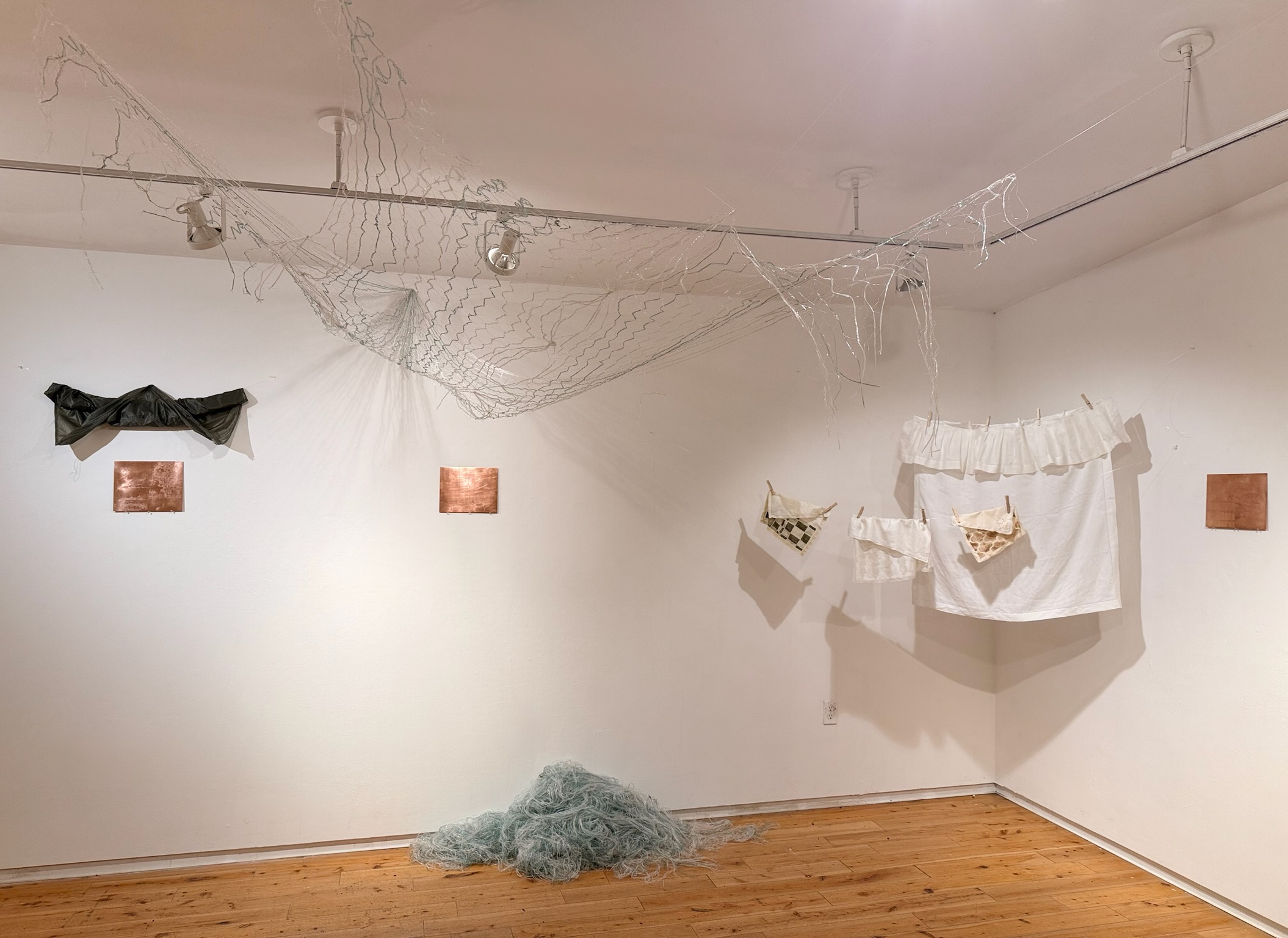
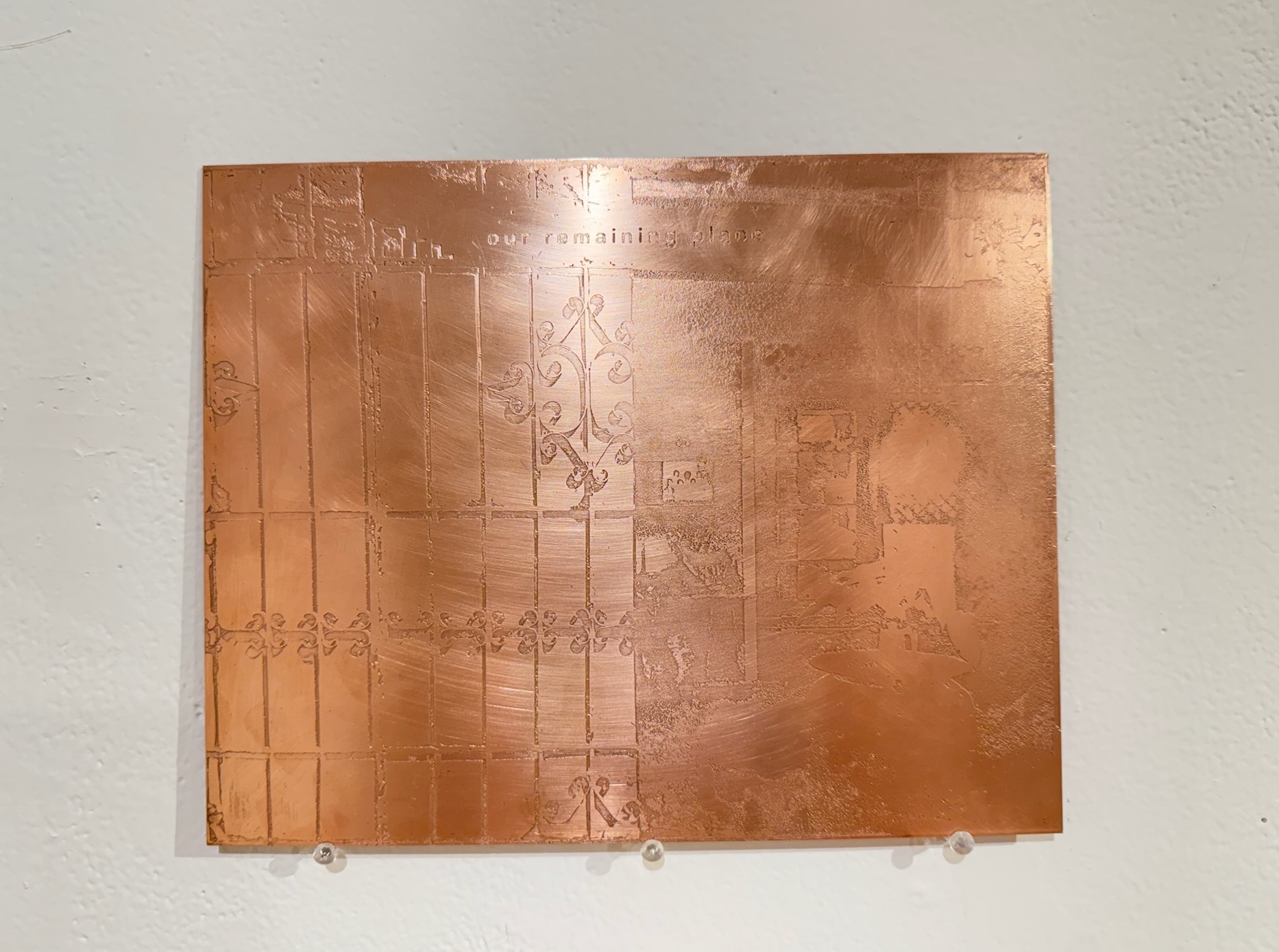
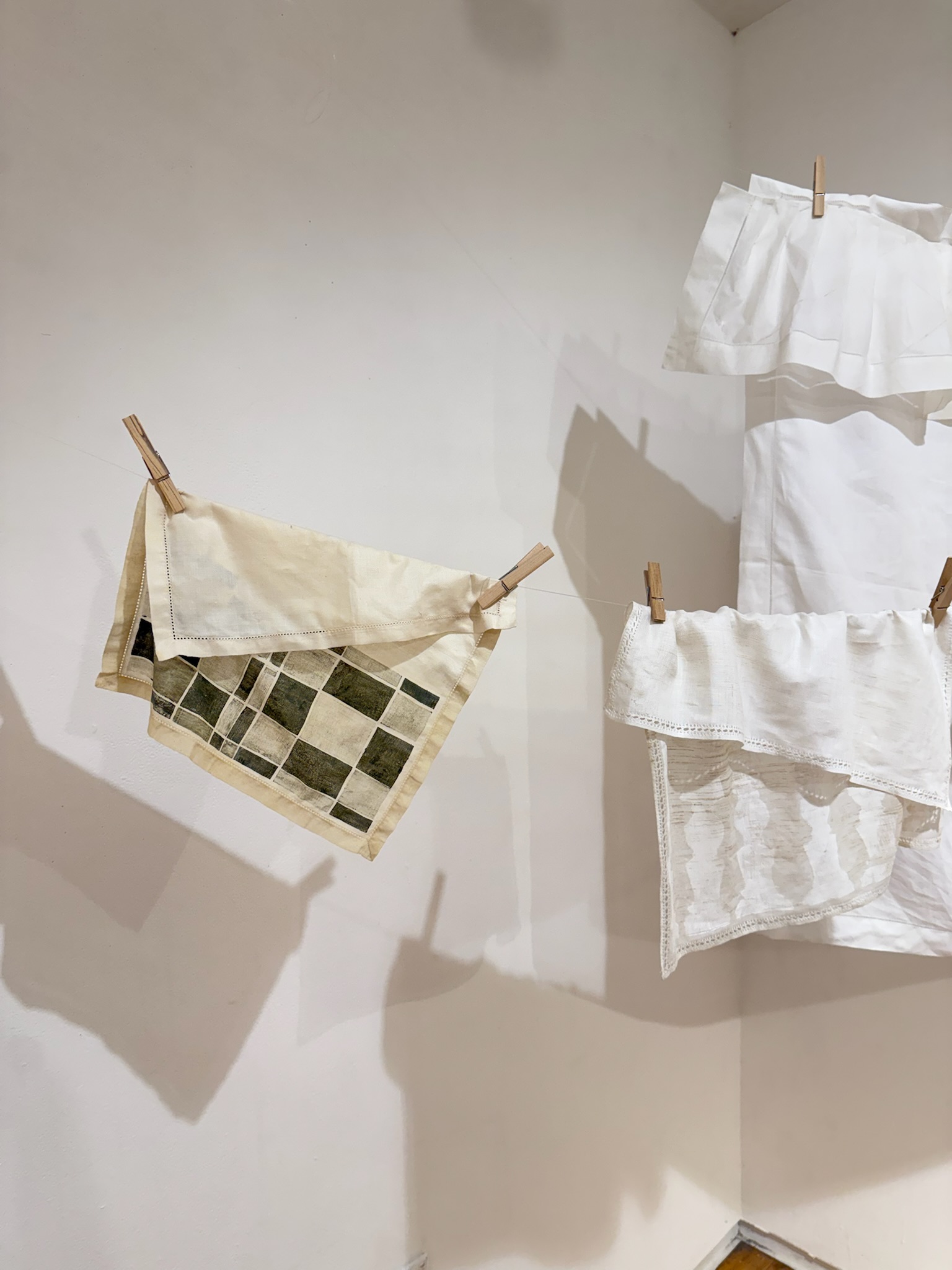
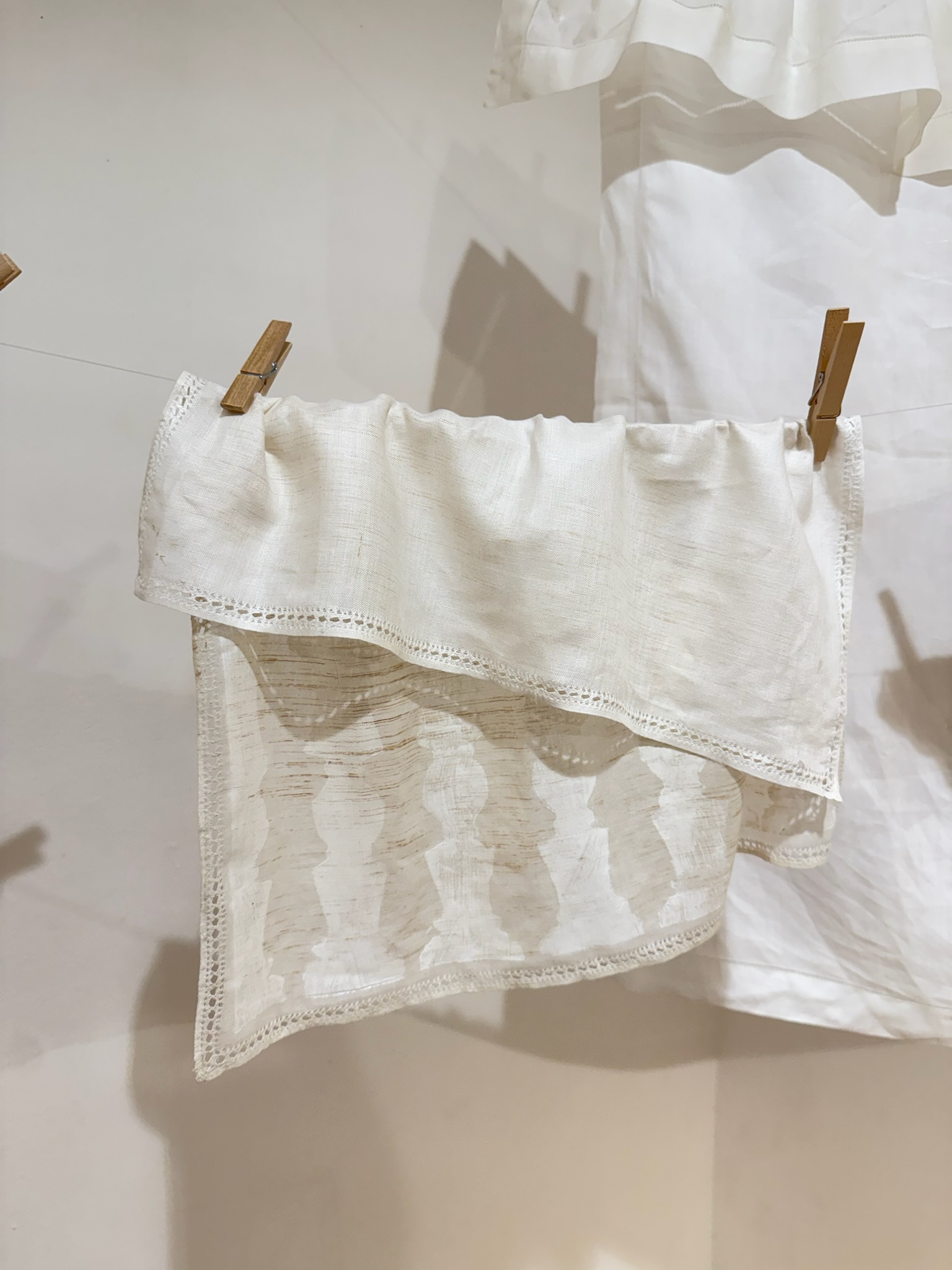
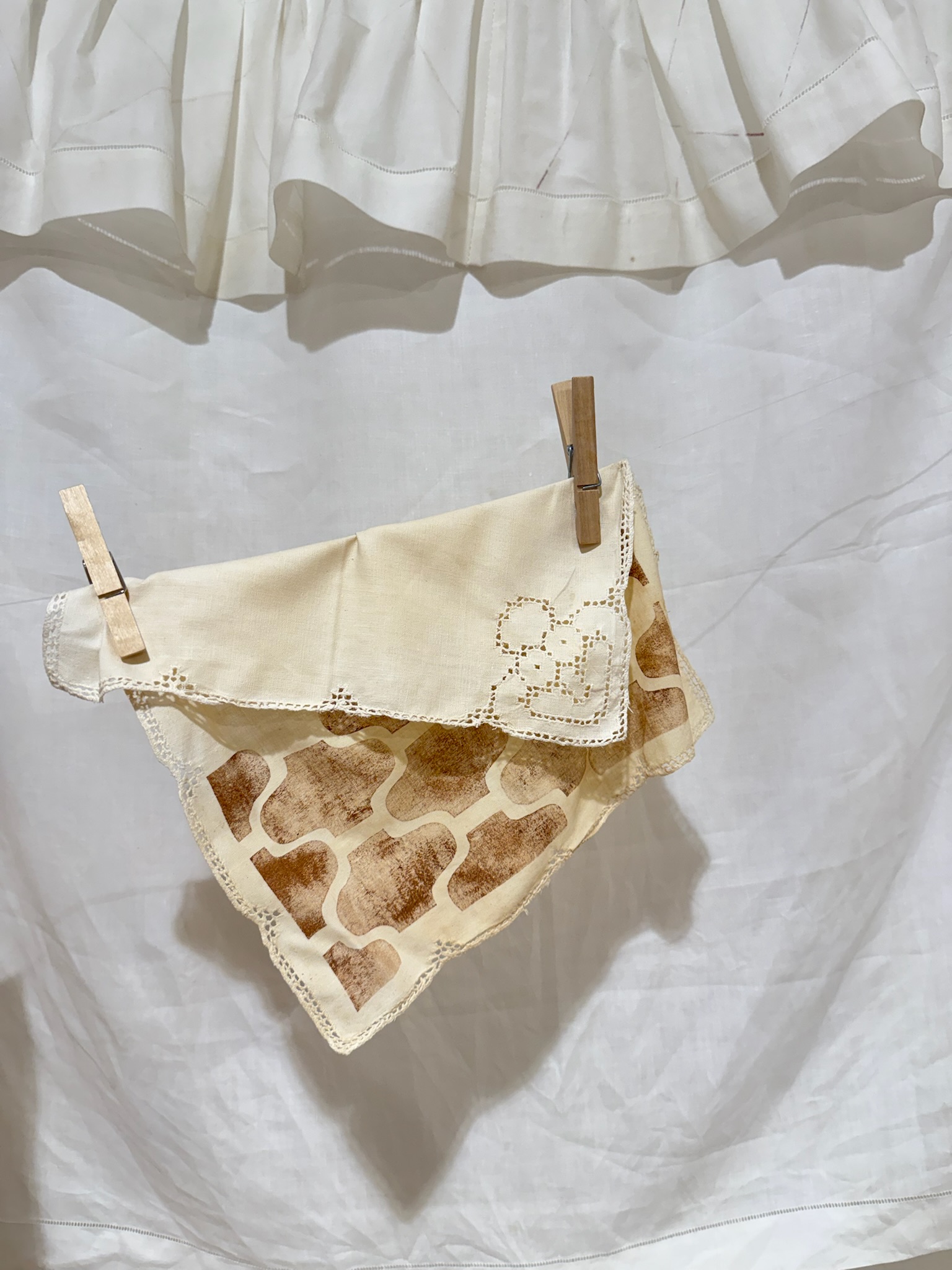
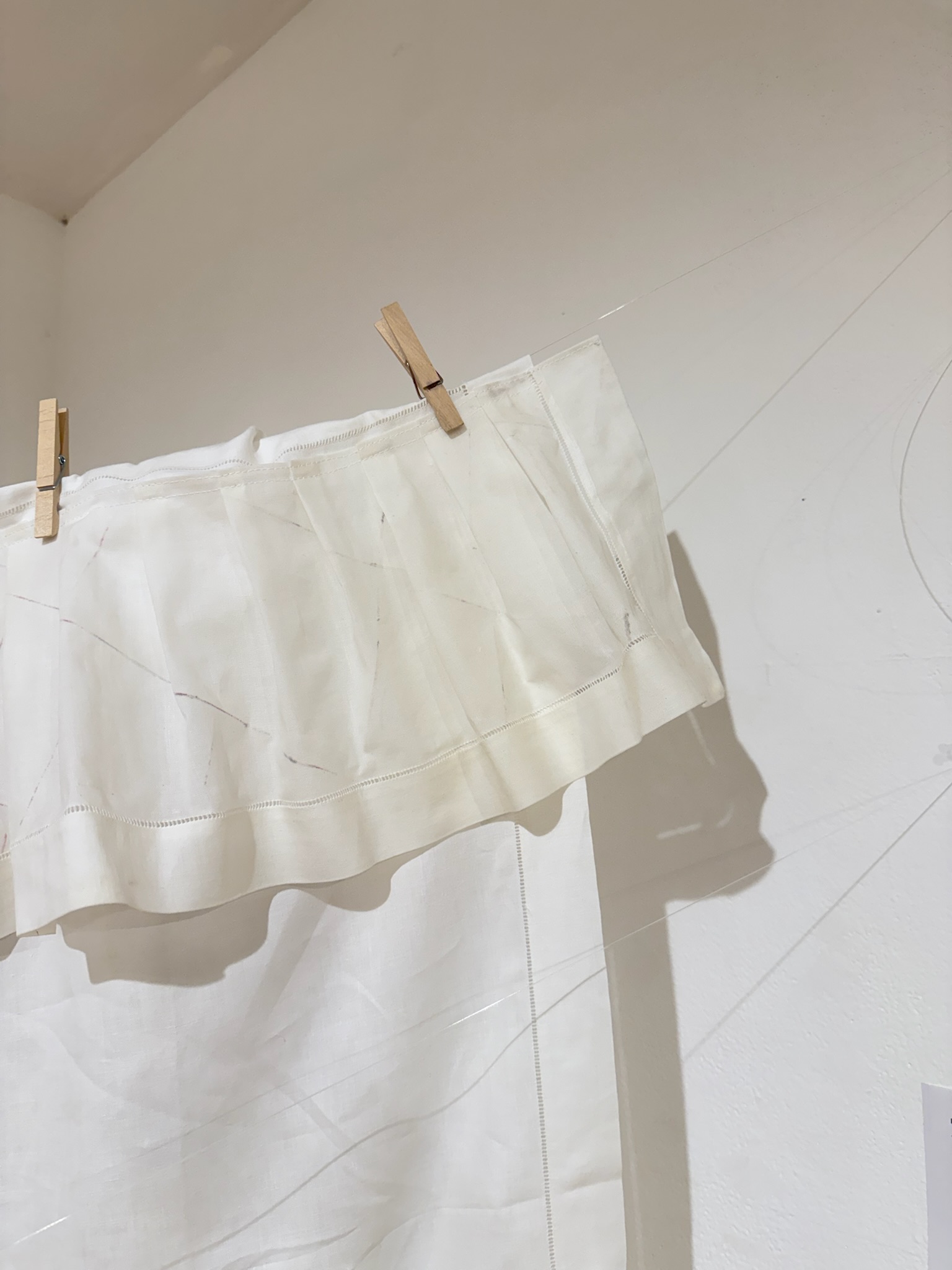
Ink on cotton/linen, copper, monofilament, clothespins
This plate shows a composite image of our respective grandmothers’ homes in Luzon. The textile installation references the drying of clothes and linens often seen inside open-air sections of Filipino homes. The hand-cut relief prints are silhouettes taken from architectural elements of traditional Philippine interiors, while the curtain and linens are treated with starching and pleating methods of fabric manipulation from traditional Filipiniana (traditional women’s dress).
Our ancestral homes were mostly inaccessible to us throughout our lives, given we live in the States. As such, we reflected on our elders' resolve to remain in their homes amidst increasing urbanization, displacement, and forced migration. We recognize that our ancestral homes are a reflection of our persistent lineage - places that hold personal history and material memory despite our spatial distance.
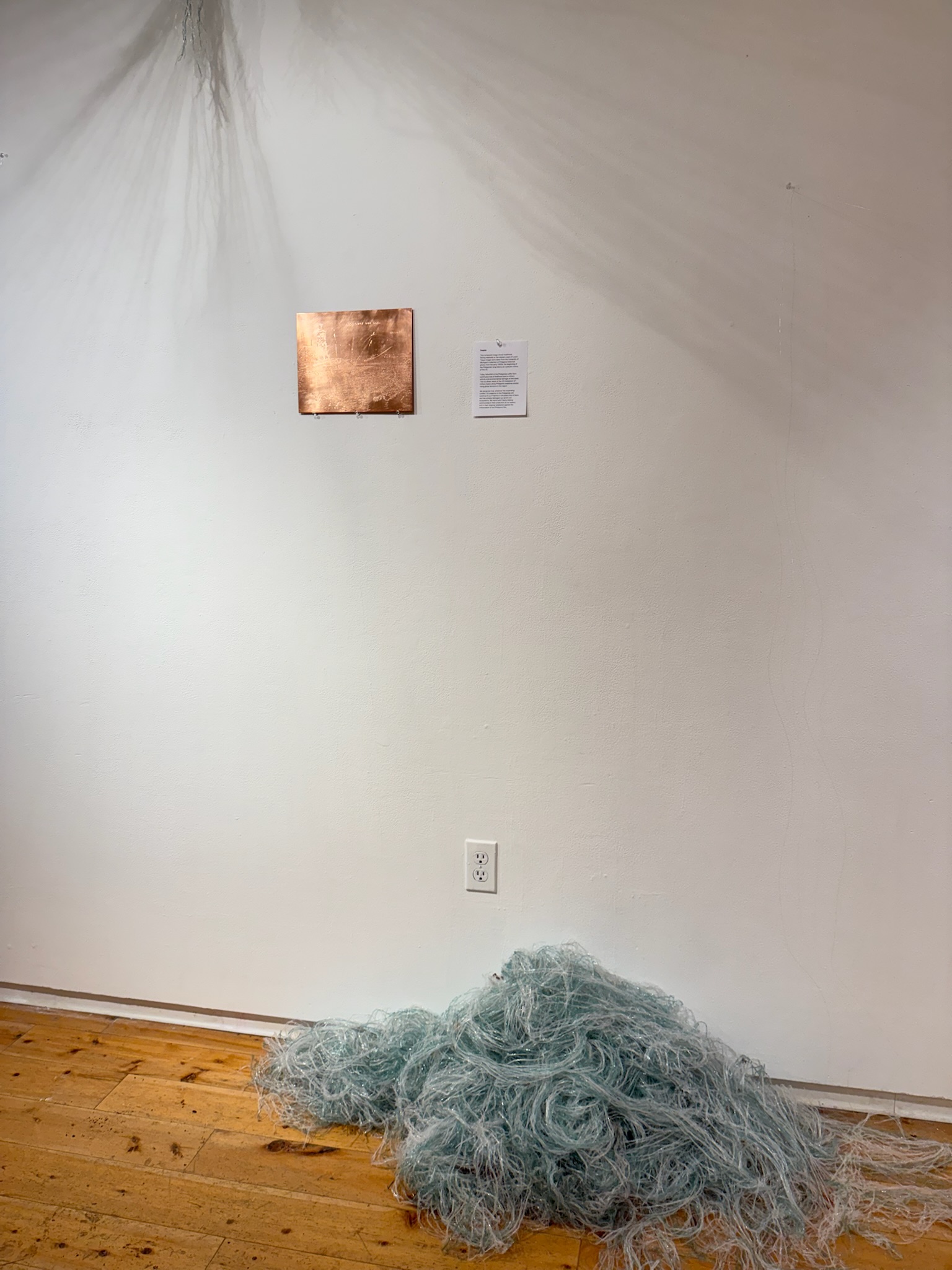
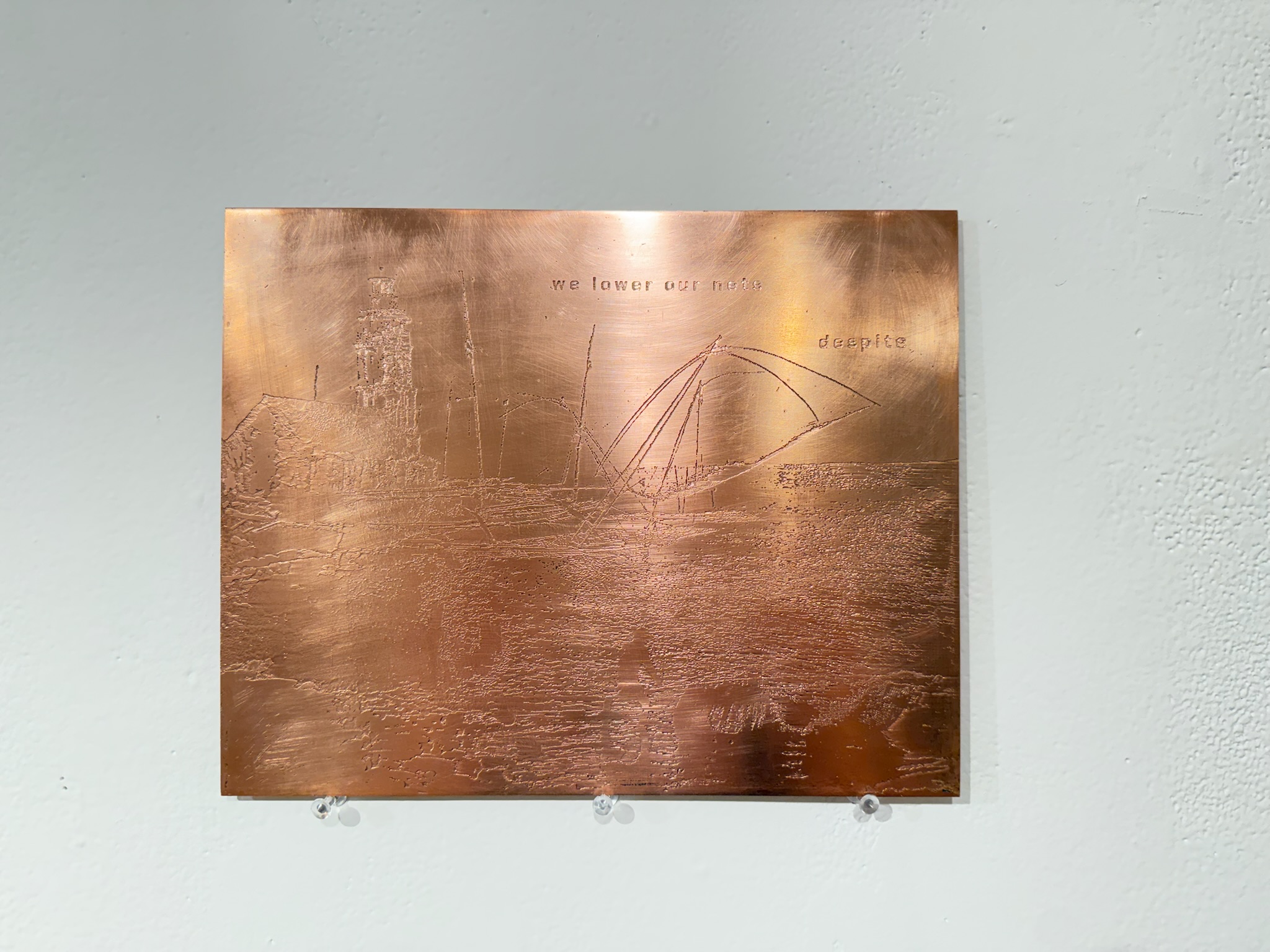
Copper, polyethylene netting
This composite image shows traditional fishing methods on the western coast of Luzon. These images were taken from the University of Michigan's collection of Philippine historical photos from the early 1900s: the beginning of the Philippines long history as a pseudo-colony of the US.
Today, fisherfolk in the Philippines suffer from continuous loss of livelihood due to military activity and environmental damage on the coast. This is a direct result of the US installation of military bases along Philippine coastlines amidst rising global tensions in the region.
We recognize that, whatever the impending conflict, US presence in the Philippines will continue to put Filipinos in the direct line of harm and has already damaged our land's rich ecosystems. We stand with Filipino fishing communities in their protection of our waters, and in their ongoing resistance against the militarization of the Philippine Sea.
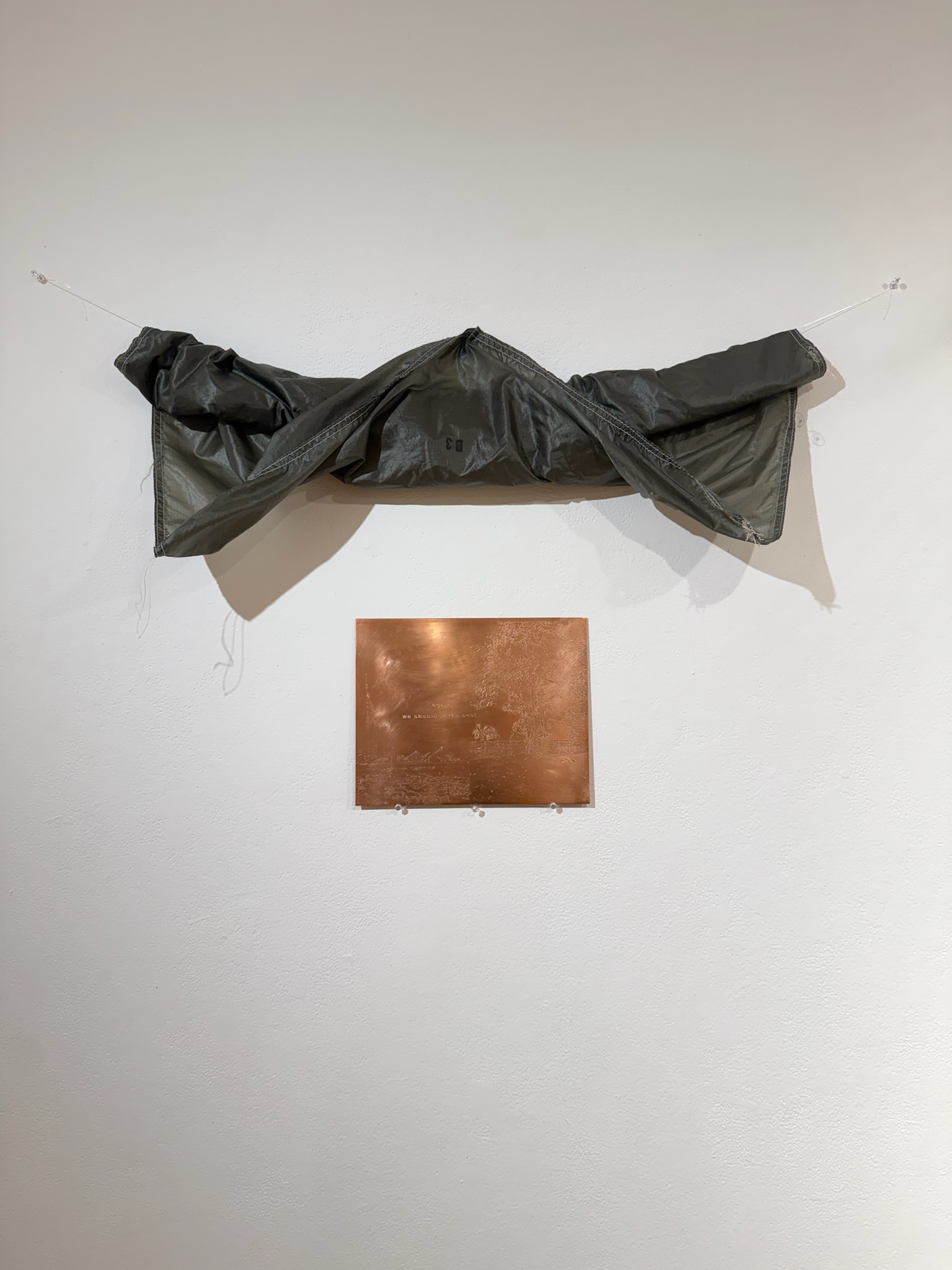
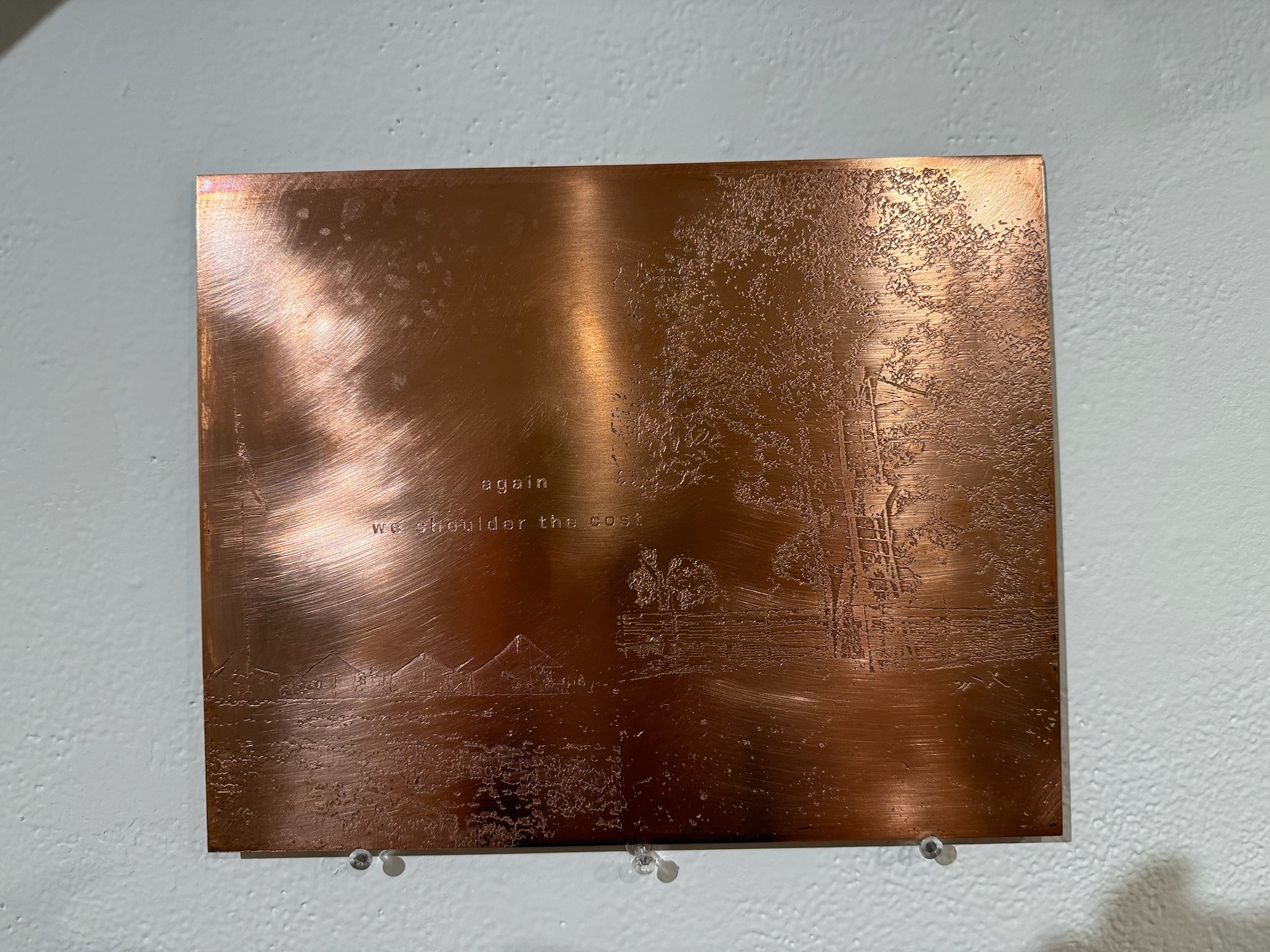
Copper, nylon, monofilament
This piece displays a composite image of a US military staging area and a sniper’s nest hidden in a mango tree. These images were taken from the Library of Congress archives, which have extensive documentation of the atrocities of the Philippine-American War (1899-1902). Through the duration of the three-year war, over two-hundred thousand Filipinos were killed by American soldiers. At the close of the war, the Philippines lost its recently gained independence from Spain and became a colony of the US.
Further, the Library of Congress’ image captions from the 1900s demonstrate the villainization of the Philippine resistance against colonization, referring to Filipino fighters as ‘insurgents’. We reclaim these images to more accurately contextualize the grief and loss that resulted from the war, and recognize that US militarization in the Philippines today risks the same outcomes of violence.